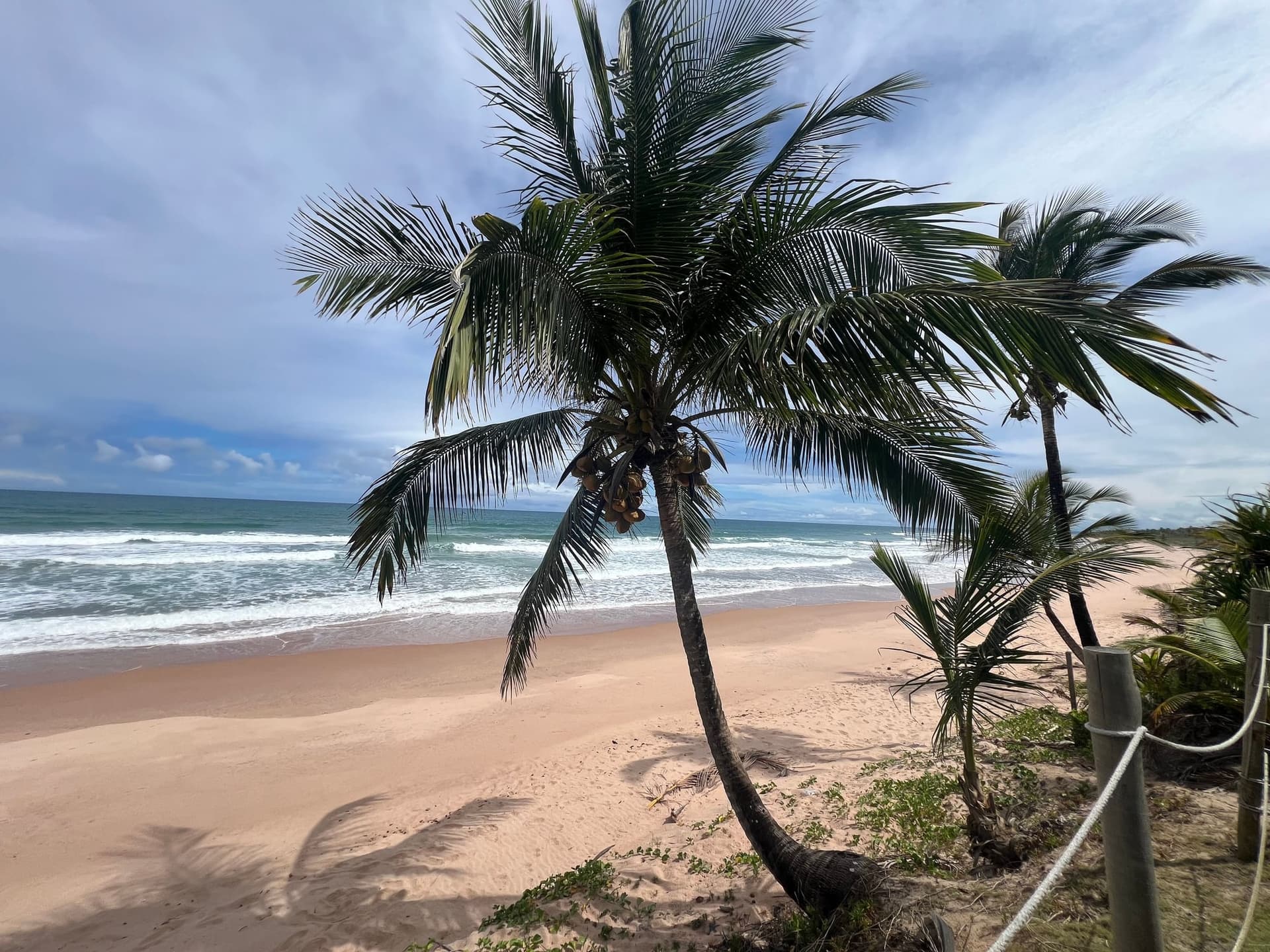
Peninsula do Maraú reveals itself gradually, like a secret whispered across 47 kilometers of coastline where the Atlantic meets Bahia's tropical interior. For seven days, this slender finger of land between the Camamu Bay and open ocean became both destination and journey, a place where time moved to the rhythm of tides and the only urgency was deciding which beach to visit next.

The accommodation set the tone for everything that followed—a sanctuary where the boundary between indoors and outdoors dissolved each evening. As twilight descended, the pool transformed into a glowing sapphire rectangle, its underwater lights creating an otherworldly glow against the darkening tropical vegetation. Here, the first and last hours of each day belonged to contemplation, to floating weightless while palm fronds whispered overhead and the sounds of dinner preparation drifted from the covered deck.
ISLAND WATERS
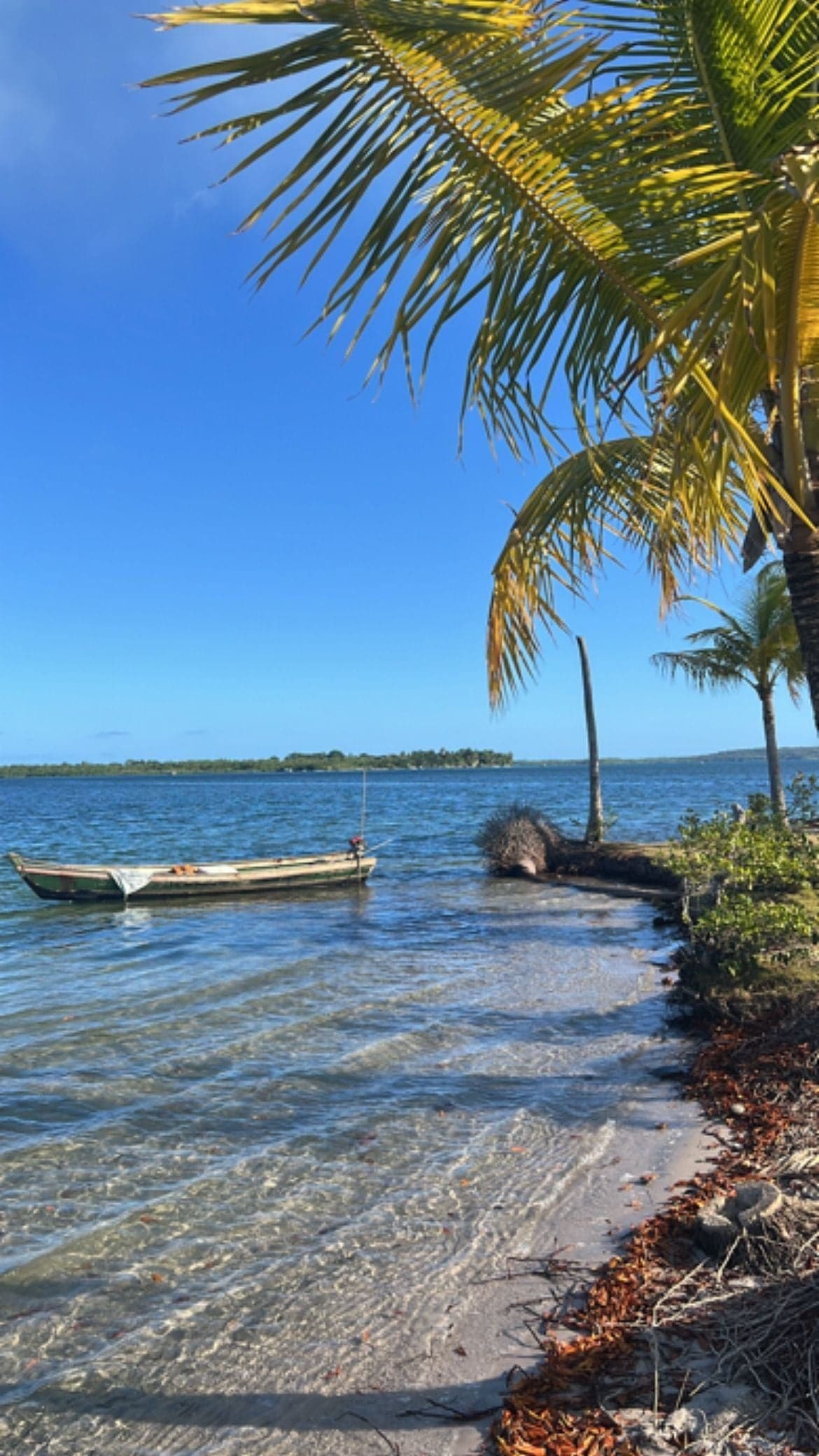
The peninsula's true character emerges not on land but on water, where dozens of islands scatter across the bay like green jewels on blue silk. The boat tour became the week's gravitational center, a full-day odyssey through an archipelago where each island promised its own version of paradise—hidden beaches accessible only by sea, coral formations where tropical fish moved in synchronized clouds, sandbanks that appeared and vanished with the tides.

The sailboat waited at the water's edge each morning, its white canvas stark against the impossible blue of the equatorial sky. These vessels are the peninsula's lifeline, connecting communities, delivering supplies, and guiding visitors through waters too shallow or intricate for larger craft. The captain navigated by memory and instinct, reading currents and sandbars invisible to untrained eyes, steering between mangrove channels where herons stood sentinel and dolphins occasionally broke the surface in silvered arcs.
TABLES BY THE SEA
Bahian coastal cuisine arrived in waves of cast iron and earthenware, each meal a testament to the ocean's proximity and generosity. Local restaurants operated on a simple philosophy: what the fishermen brought in before dawn would be on tables by noon, barely transformed beyond fire, oil, and the precise hand of seasoning passed down through generations.

The food told stories of cultural collision and adaptation—indigenous ingredients meeting African techniques meeting Portuguese traditions. Shrimp sizzled in dendê oil alongside cassava farofa, while bowls of vibrant sauces circled the table like satellites. Meals stretched across hours, conversations moving between Portuguese and hand gestures, punctuated by cold beer and the occasional toast to nothing in particular and everything at once.
For seven days, this slender finger of land became both destination and journey, a place where time moved to the rhythm of tides.
THE ROAD TO CASSANGE
Not every adventure unfolded according to plan. The drive to Cassange beach—legendary for its untouched beauty—ended with the rental car's wheels spinning uselessly in deep sand, the vehicle listing at an angle that suggested hubris meeting physics. It took a local farmer's tractor, considerable patience, and the kind of communal problem-solving that characterizes rural Brazil to extract the vehicle from its sandy trap. The beach, when finally reached on foot, proved worth every moment of embarrassment.
Peninsula do Maraú operates on a different temporal system than the world beyond its borders. Seven days proved simultaneously too much and never enough—enough to establish rhythms, to recognize faces, to know which beach suited which mood, but never enough to exhaust the possibilities. The peninsula kept its secrets even as it revealed them, suggesting that some places are meant to be visited repeatedly rather than conquered in a single trip. As the final evening arrived and the pool lights flickered on once more, the real journey seemed not to be ending but merely pausing, waiting for the inevitable return.